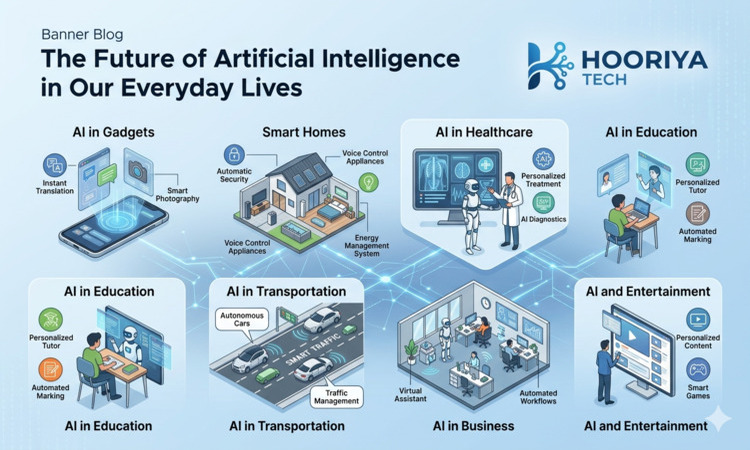
The application of artificial intelligence in our lives becomes evident day by day. Smartphones, houses, medical practice, and online commerce are just some examples of where AI applications transform our lives. The forecast suggests that by 2026 and onwards, AI technology will penetrate more deeply into people’s daily lives.
Contemporary developments in AI applications prove that the field of AI has opened up for everyone – not only for big corporations or tech specialists but also for students and professionals across the world.
AI in Smartphones and Personal Gadgets
Currently, AI is used in personal gadgets, such as smartphones, for voice assistants, facial recognition, photography, and predictive typing. In the future, personal gadgets will get smarter due to the use of AI.
Future AI features in smartphones can be represented as follows
- Enhanced voice assistants
- Instant translation into any language
- Optimization of energy consumption
- AI photography functions
- Customized app recommendation services
Smart Homes and Automation
AI is also being used to make homes smarter through the use of automated devices. The use of smart speakers, security cameras, thermostats, and lighting systems that employ AI is already common practice.
Smart Home Functions in the Future
- Home security systems that will be automatic
- Appliances that will be controlled by voice commands
- Smart energy management systems in the home
- Advanced health monitoring systems
- Environmentally-friendly homes
AI-enabled homes will become more advanced, thus making living easy.
AI in Healthcare
Healthcare is one of the sectors that benefit the most from AI technologies. It can help with disease detection, diagnose patients and assist doctors in treating diseases.
Some applications of AI in the future include
- Use of AI diagnostics
- Remote patient monitoring
- Custom-made treatments based on AI results
- Medical research using AI
- Medical assistants based on AI
Many hospitals have started using artificial intelligence to improve healthcare and decrease medical errors.
AI in Education
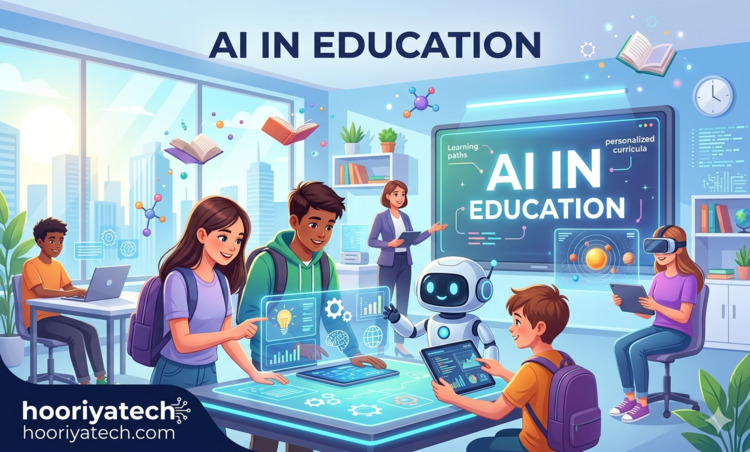
AI will transform the education sector where students and teachers will enjoy advanced learning methods. Artificial intelligence is able to offer personalized lessons depending on each learner.
Benefits of AI in Education
- Individualized teaching experience for learners
- Automated marking systems
- Smart tutoring software
- Learning foreign languages using AI tools
- More efficient online education platforms
The technology will enable access
transportation industry with autonomous cars, traffic management systems, and intelligent navigation.
Possible advancements in transportation through AI in the future
- Self-driving cars
- AI traffic management systems
- Intelligent transportation systems
- Improvements in navigation systems
- Traffic congestion reduction
Modern firms that are investing in AI technologies are contributing to the creation of the future of intelligent transportation.
AI in Business and the Workplace
Many companies have begun implementing artificial intelligence to automate activities, enhance customer experience, and analyze information. With AI tools businesses are saving time and money while being productive.
Workplace Applications of AI Technology
- Automation of customer service
- AI marketing applications
- Analytics for businesses
- Workflow automation
- Virtual business assistants
Companies will keep on transforming their activities by implementing AI technology in their businesses.
AI and Entertainment
Entertainment platforms already use AI technology to provide users with movies, music, and other content. Future AI systems are expected to offer even better entertainment experiences.
These can include:
- AI-produced content
- Personalized entertainment recommendations
- Smart games
- Virtual reality entertainment options
- Digital media interactions
Challenges of Artificial Intelligence in Daily Life
While being advantageous for people, there are a number of concerns related to AI usage that should be taken into account.
General Concerns about AI
- Data privacy violations
- Loss of jobs due to automation
- Safety threats to users
- Ethical issues
- Reliance on technology
Policies and regulations ensuring proper use of artificial intelligence must be developed by governments and IT companies.
The Future of People and AI Relationship
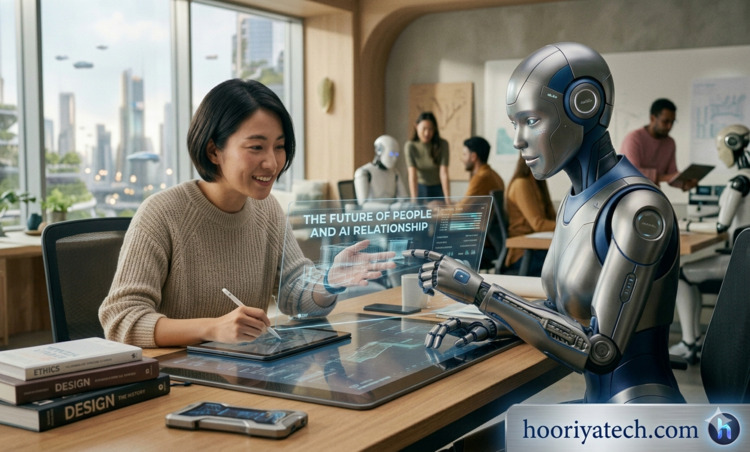
In the future, AI will not completely substitute for humans. Instead, such technologies will complement humans’ abilities by performing routine operations and letting humans concentrate on creative activities.
According to experts, the use of AI systems in future society would lead to
- Increased efficiency in healthcare
- Productivity growth
- Improved problem-solving skills
- Better communication opportunities
- Development of smarter cities
Collaboration between humans and artificial intelligence may become one of the main spheres of technological advancement in the future.
Conclusion
Artificial Intelligence affects daily life greatly. AI can increase efficiency in numerous industries like medicine, education, transportation, and entertainment, thus making the systems smarter.
Modern updates in AI technology allow businesses and consumers to predict the impact of artificial intelligence on the lifestyle of people in the future.