For years, businesses reached customers through Google searches and social feeds. Now there is a third place: the conversation with an AI assistant. OpenAI launched advertising inside ChatGPT in the United States in early 2026, opened a self-serve Ads Manager, and has since expanded to more countries. If your customers ask ChatGPT for recommendations, this affects you.
OpenAI says the platform reached $1 billion in annualized revenue run rate in under 200 days and is used by tens of thousands of advertisers. In this guide we explain how ChatGPT ads work, who sees them, how targeting and pricing work, and how a small business can test them without wasting money.
This is part of our business and AI coverage. If you are new to AI assistants, start with our ChatGPT vs Gemini vs Claude comparison.
What Are ChatGPT Ads?
ChatGPT ads are sponsored placements that appear below ChatGPT’s answers. Each ad is labeled as sponsored and separated from the answer, and OpenAI says ads are not part of the answer itself.
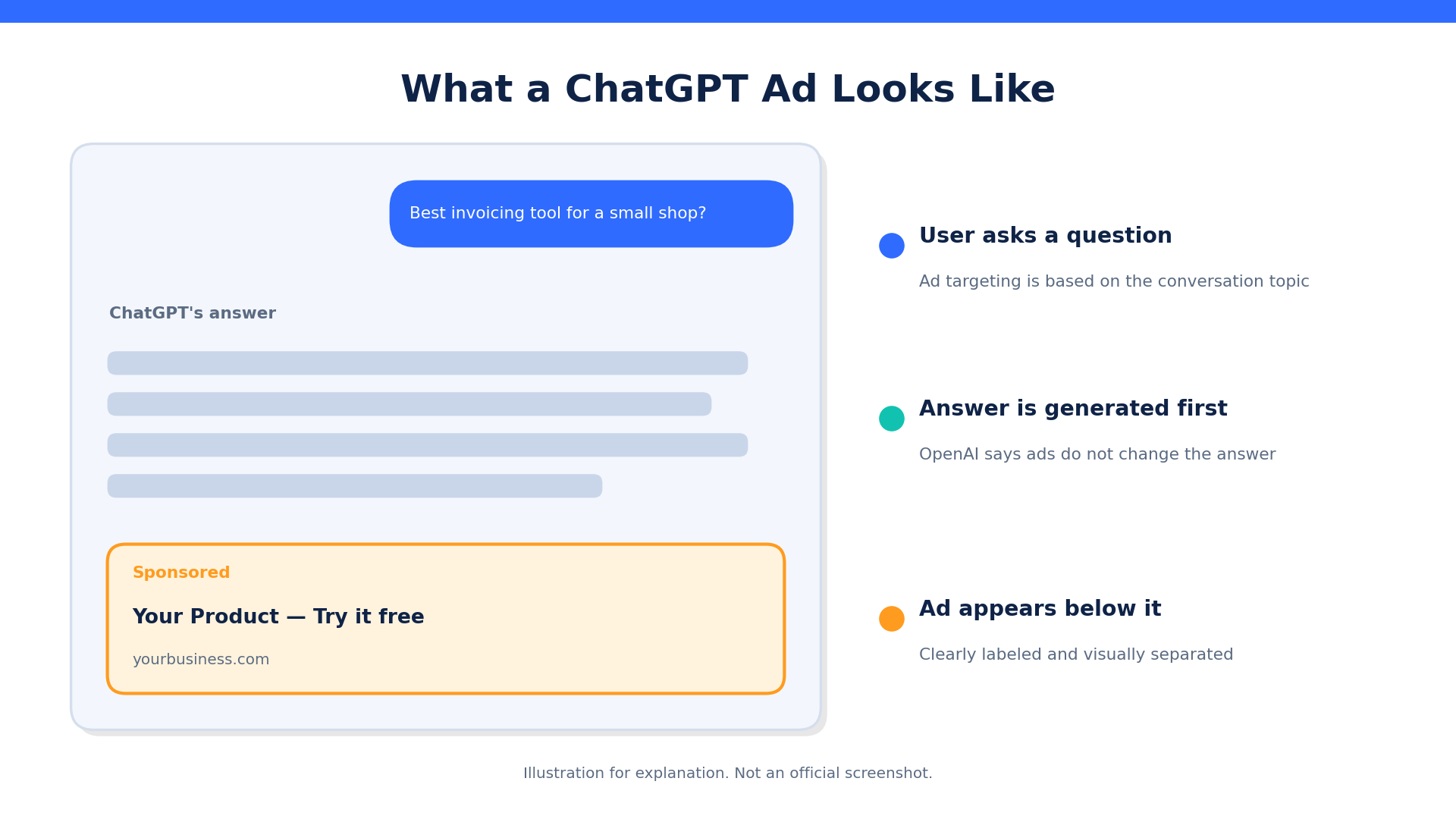
The most important promise is what OpenAI calls answer independence. The company states that advertising does not influence the answers ChatGPT gives, advertisers cannot pay to change a response, and advertisers do not get access to people’s private conversations.
ChatGPT Ads Timeline: From Test to Global Platform
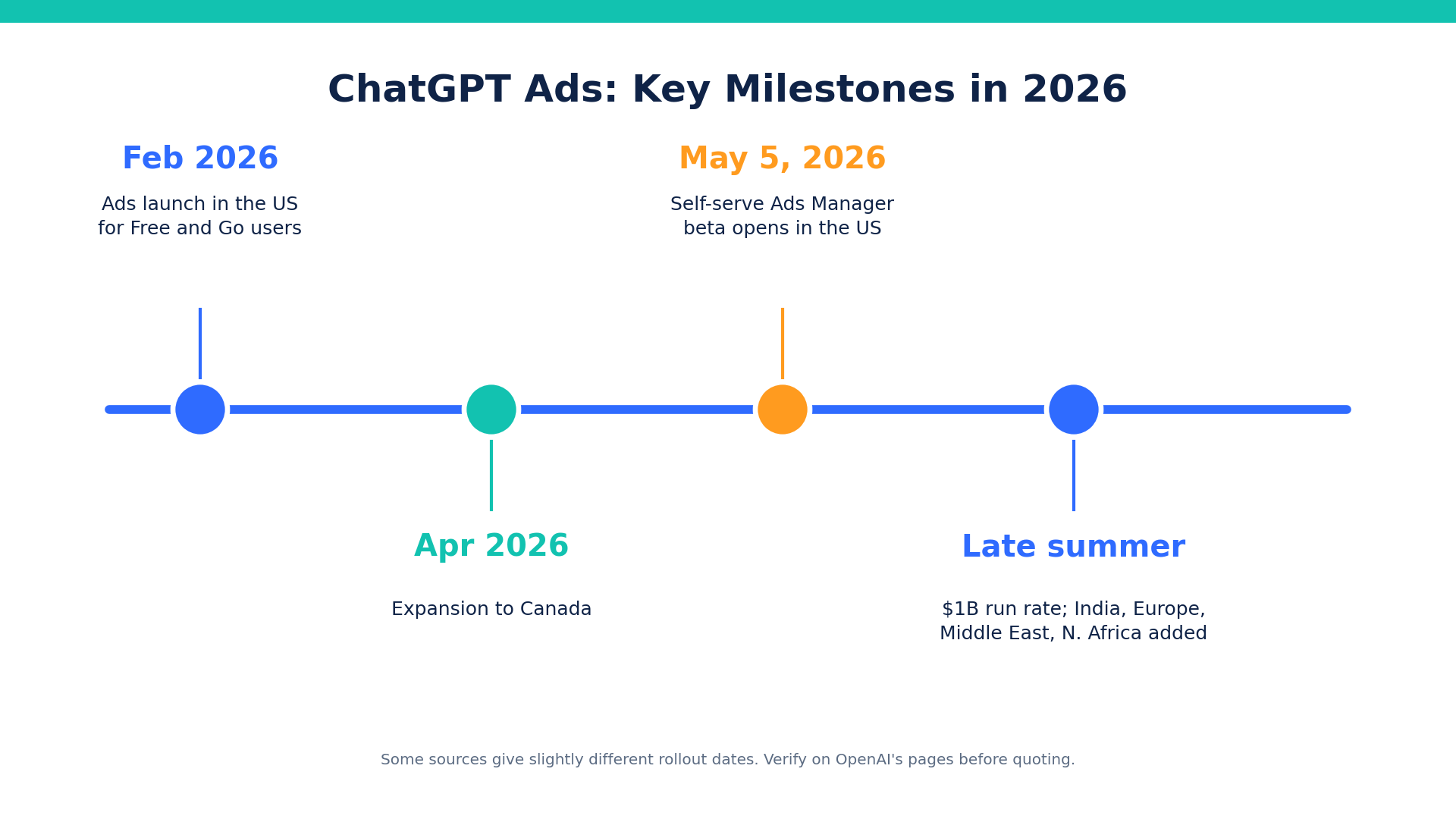
- February 2026: ads launched for US users on the Free and Go plans.
- April 2026: the platform expanded to Canada.
- May 5, 2026: a self-serve Ads Manager beta opened to US advertisers. Reports say the earlier $50,000 minimum was removed and cost-per-click buying was added, which matters most for small businesses.
- Late summer 2026: OpenAI said ads reached a $1 billion run rate and became available through Ads Manager in India, Europe, the Middle East and North Africa.
Note: outlets report some rollout dates differently, so confirm exact dates and availability for your country on OpenAI’s own pages before you plan a campaign.
Who Sees ChatGPT Ads?
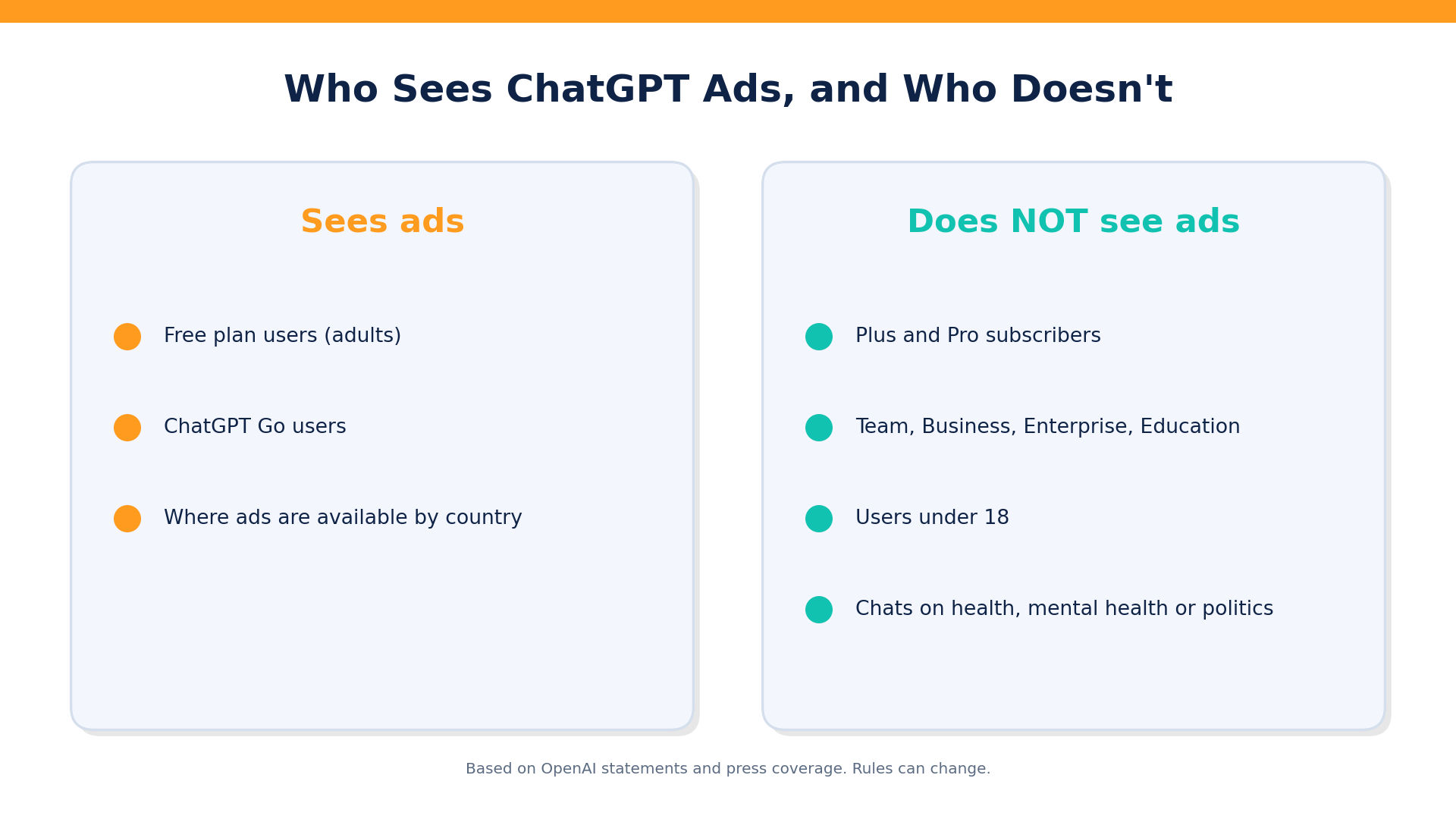
Ads appear for adult users on the Free plan and the Go plan, which is priced at $8 per month. Plus, Pro, Business, Enterprise and Education users do not see them. OpenAI also says ads do not appear for users under 18 or next to sensitive topics such as health, mental health and politics. Free users can opt out of ads in exchange for fewer daily messages.
This has a practical meaning for you. Your ad reaches a large audience, but not paying subscribers, and businesses in health or political categories will find their options limited.
How ChatGPT Ad Targeting Works
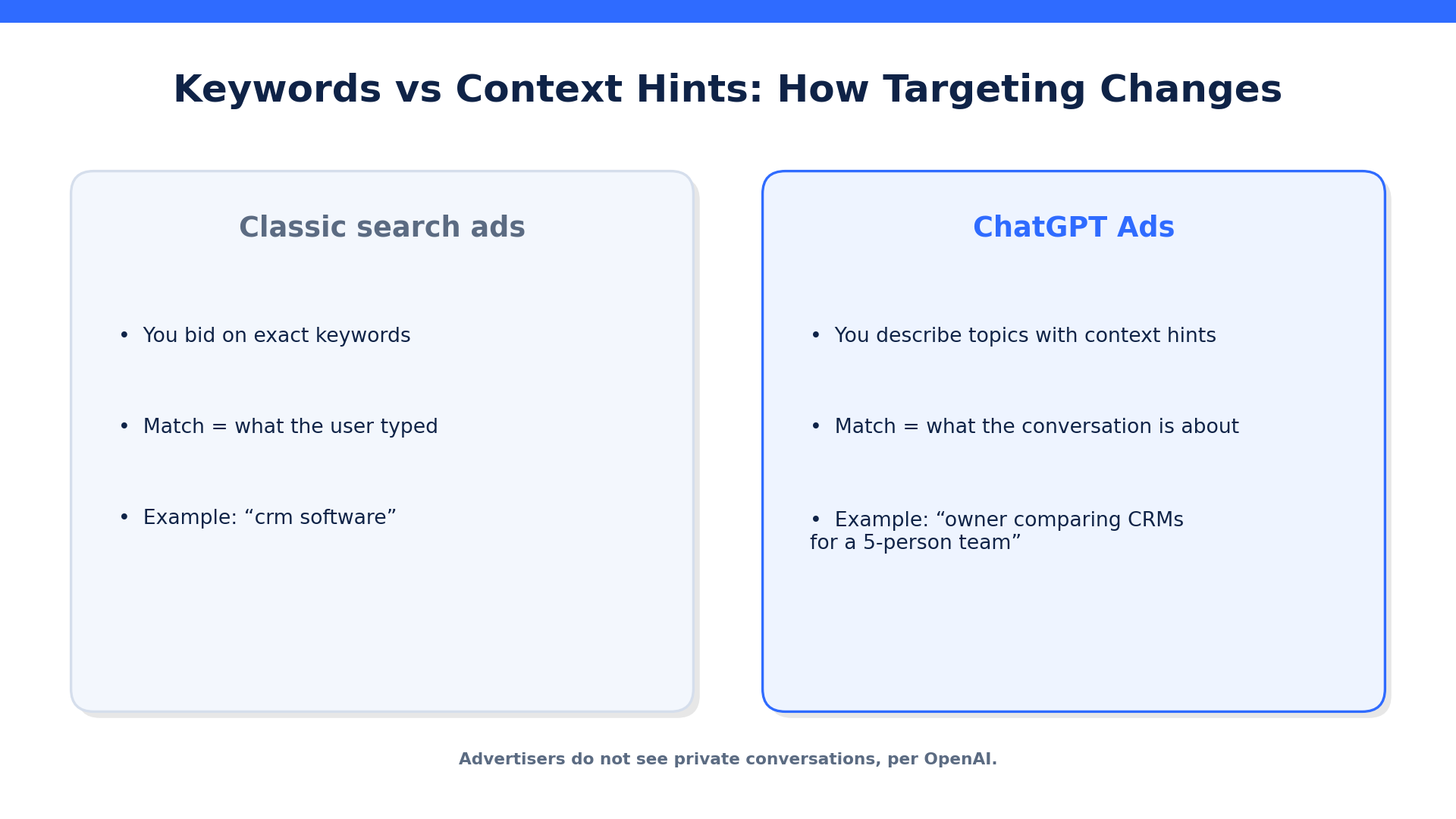
Search ads are built around keywords. ChatGPT ads use context hints instead. These are descriptions of the conversations, needs or situations where your product might be useful, and the platform matches your ad to the conversation. Industry write-ups say the system can also use the wider conversation, past chats and earlier interactions with ads, depending on the country and the user’s settings.
OpenAI has also added product feeds, platform and geographic targeting and custom audiences, which helps ecommerce stores and local businesses. Advertisers can track results with a conversion pixel or the Conversions API.
ChatGPT Ads Cost and How to Buy
Early pilot advertisers reportedly committed $200,000 minimums and paid roughly $60 CPMs, which put ChatGPT closer to premium streaming ads than to search. That has changed. During the pilot, only cost-per-impression was available, and OpenAI now offers cost-per-click as well. Reports say US advertisers can start through the self-serve Ads Manager without a minimum spend.
You can create ads yourself in Ads Manager or work with agency and ad tech partners. OpenAI is also adding an Ads Manager plugin inside ChatGPT that can turn a website or brief into ads using plain language. Pricing and rules are changing quickly, so treat any cost figure as a snapshot and check the current Ads Manager screen.
ChatGPT Ads by the Numbers
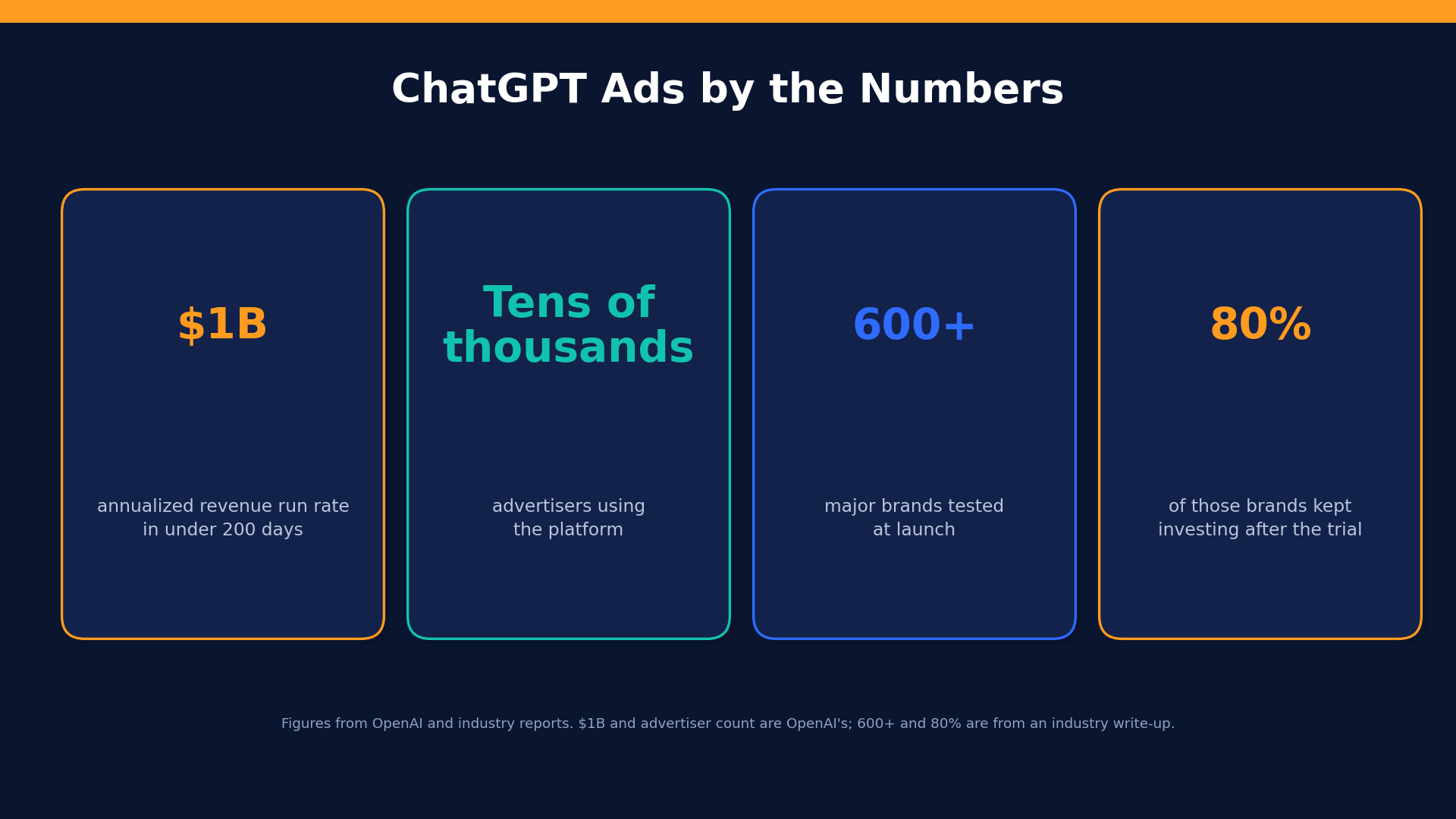
OpenAI’s own numbers are the $1 billion run rate and the tens of thousands of advertisers. An industry write-up adds that more than 600 major brands tested the platform at launch and 80% kept investing after the trial. Axios reported that OpenAI’s goals are $2.5 billion in ad revenue this year and $100 billion by 2030, which shows how seriously the company takes this business.
ChatGPT Ads for Small Business: Pros and Cons
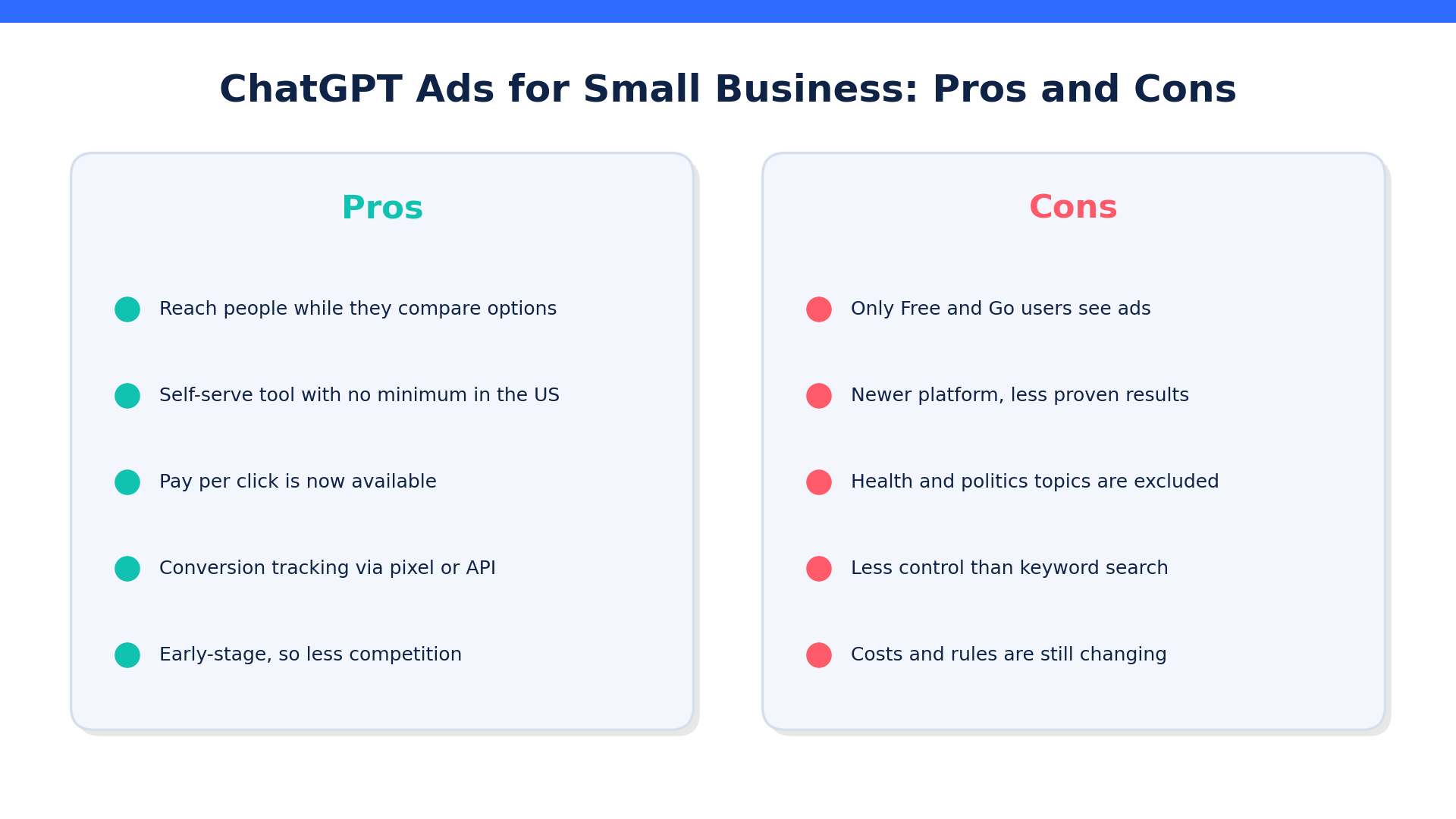
Pros
- You reach people while they compare options and make decisions.
- The self-serve tool and cost-per-click option make small tests possible.
- Conversion tracking lets you measure leads and sales.
- The platform is new, so some categories have less competition.
Cons
- Only Free and Go users see ads, so subscribers are out of reach.
- Results are less proven than Google or Meta ads, and rules and costs are still changing.
- Sensitive topics are excluded, and you have less control than with exact-match keywords.
How to Test ChatGPT Ads: 6 Steps
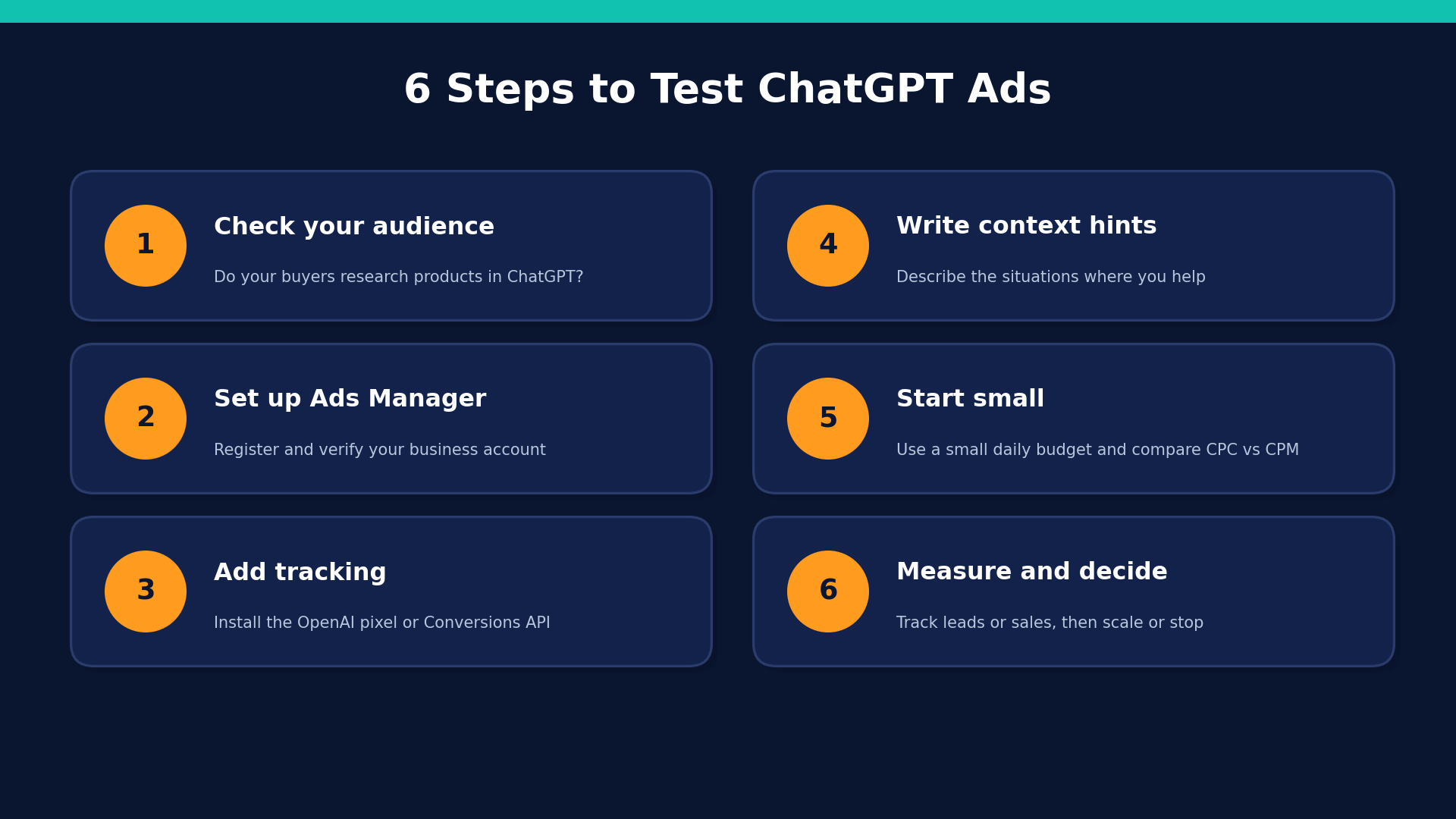
- Check your audience: ask whether your buyers research products in ChatGPT.
- Set up Ads Manager: register and complete business verification.
- Add tracking: install the OpenAI pixel or Conversions API on your website.
- Write context hints: describe the situations in which your business helps, such as “owner comparing invoicing tools for a small team”.
- Start small: use a small daily budget and compare cost-per-click with cost-per-impression.
- Measure and decide: track leads or sales, then scale or stop.
Do Not Forget Organic AI Visibility
Ads do not change ChatGPT’s answers, so paying will not make the assistant recommend you. Whether AI tools mention your business in their answers still depends on clear, trustworthy content. Many businesses now work on this through answer engine optimization, and small teams can start with our guide to how small businesses use AI.
Frequently Asked Questions
Are ChatGPT ads live?
Yes. Ads launched in the US in early 2026 and have expanded to more countries since, with a self-serve Ads Manager.
Do ads change ChatGPT’s answers?
OpenAI says no. It states that ads run on separate systems, are clearly labeled and do not influence the answers.
Who sees ChatGPT ads?
Adult users on the Free and Go plans where ads are available. Plus, Pro, Business, Enterprise and Education users do not see them, and neither do users under 18.
How much do ChatGPT ads cost?
Early pilot deals were reported at around $60 CPMs with large minimums. Cost-per-click buying is now available, and reports say US advertisers can start without a minimum. Check Ads Manager for current pricing.
Can I target by keyword?
ChatGPT ads mainly use context hints that describe conversation topics, not exact-match keywords.
Do advertisers see people’s chats?
No. OpenAI says advertisers do not get access to private conversations, and users can control ad personalization.
Is it worth it for a small business?
It depends on your audience. A small, tracked test is reasonable if your customers research purchases in ChatGPT. If not, spend on channels with proven results first.
Conclusion
ChatGPT ads are no longer an experiment. They are a growing ad channel with a self-serve tool, click-based buying and conversion tracking. They also have limits: only some users see them, some topics are excluded, and the platform is still changing. For most small businesses the sensible move is a small, measured test while continuing to build the content that makes AI tools mention you for free. Follow HooriyaTech for more AI and business updates.
Keep reading: more business and AI guides on HooriyaTech.