Silicon-Carbon Batteries Explained: Why 2026 Phones Have 7,000–8,000mAh Batteries
Silicon-Carbon vs Lithium-Ion: Is a Bigger Phone Battery Worth It in 2026?

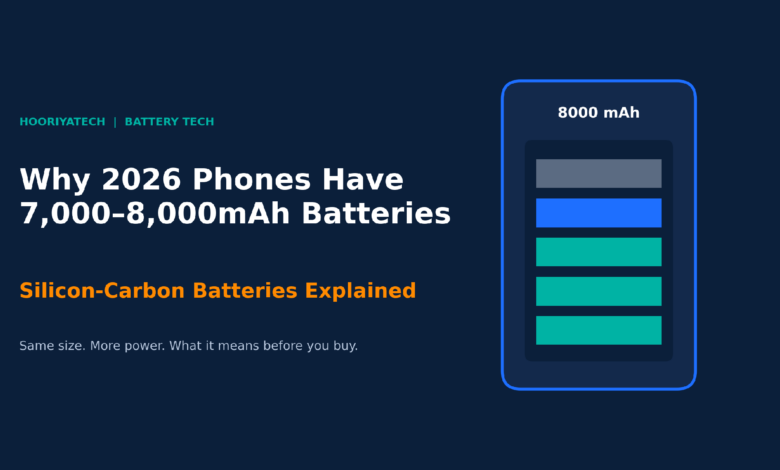
Not long ago, a 5,000mAh battery was the headline spec on a flagship phone. In October 2026, that number looks modest. The Oppo F35 and F35 Pro launched in India on October 5 with 8,000mAh batteries and 80W charging, and the Vivo V80 followed on October 6 with a 7,200mAh battery and 90W charging. Phones are not getting thicker to make this happen, so something changed inside the battery.
That something is a new anode material: silicon-carbon. In this guide we explain what a silicon-carbon battery is, why it holds more energy, why Samsung waited until 2026 to adopt it, and what you should check before buying a phone that advertises a huge battery.
What Is a Silicon-Carbon Battery?
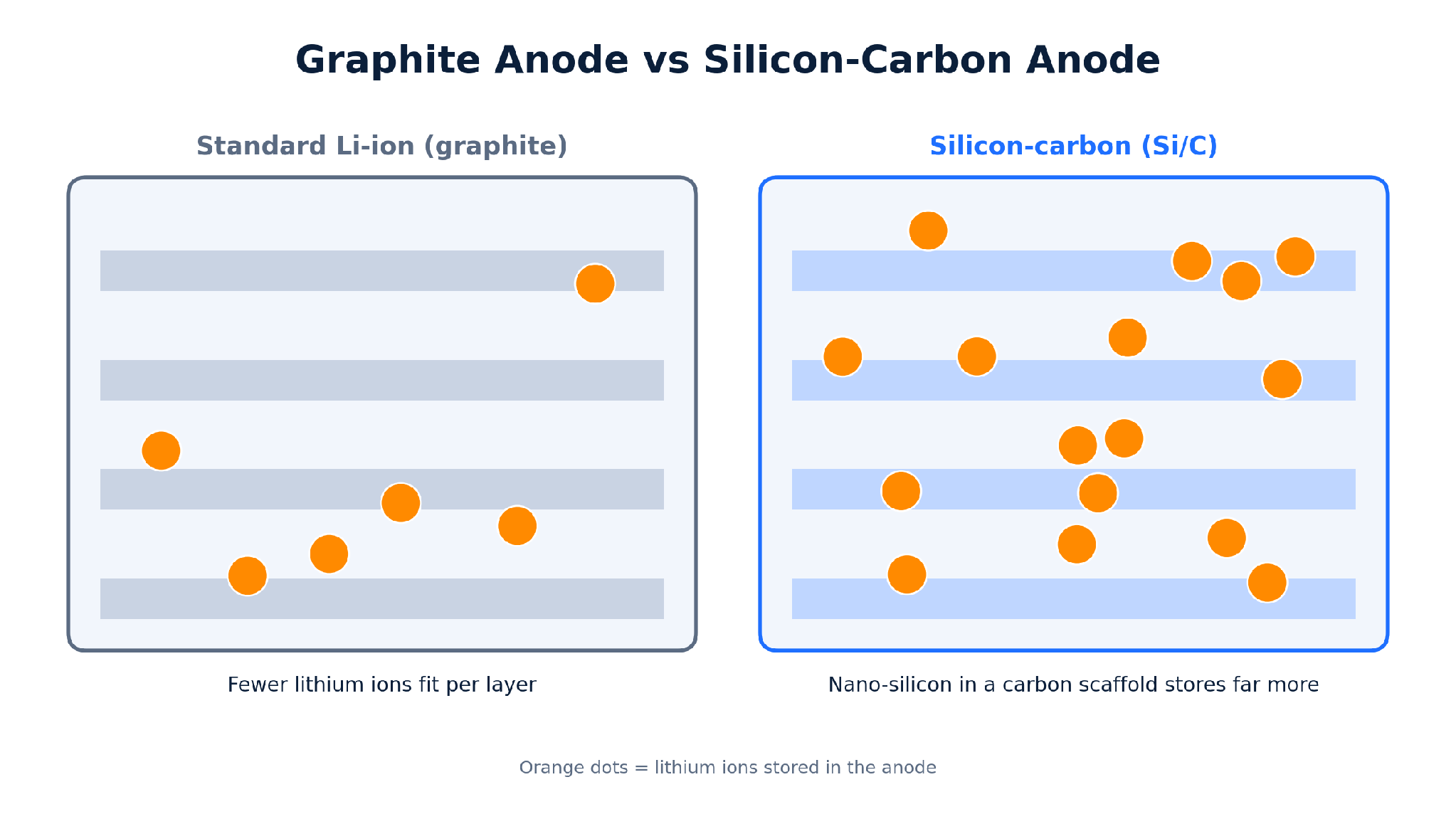
A silicon-carbon battery is still a lithium-ion battery. The difference is in the anode, the part that stores lithium ions while the battery charges. Traditional cells use graphite for the anode. Silicon-carbon cells replace some or all of that graphite with a composite of silicon and carbon.
Silicon is attractive because it can hold far more lithium than graphite. Industry explainers put the figure at roughly ten times in theory. That is why battery makers have been chasing it for years.
Why Not Just Use Pure Silicon?
The catch is swelling. Pure silicon can expand by around 300–400% as it fills with lithium during charging. Repeated expansion and shrinking would crack the anode and shorten the battery’s life, and it raises safety questions.
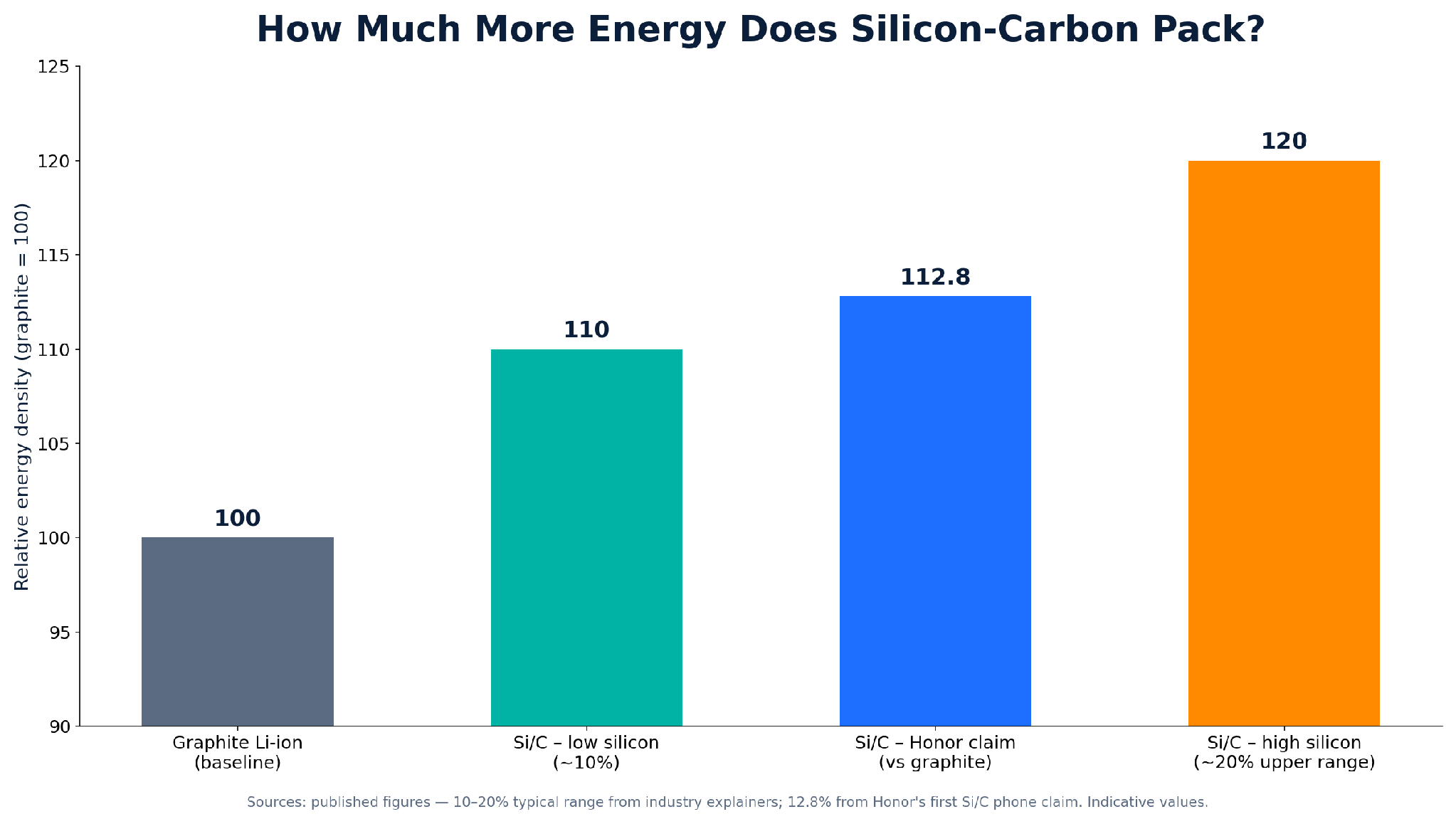
Silicon-carbon composites solve this by spreading small amounts of nano-silicon through a conductive carbon scaffold. The carbon gives structure and absorbs some of the stress. Most designs reportedly use only about 5–15% silicon, which is enough to lift energy density by roughly 10–20% without the destructive swelling.
How Much More Battery Do You Actually Get?
Honor was the first brand to put silicon-carbon in a phone, and it claimed about 12.8% more energy density than a graphite-anode battery. In practical terms, a battery that would have been 5,000mAh can reach about 5,500–6,000mAh in the same physical space. Alternatively, a brand can keep the capacity the same and make the phone slimmer.
Makers also point to secondary benefits, including better performance in cold weather (some cite operation down to -20°C), more usable power at low voltage, and a higher potential for fast charging. Treat these as manufacturer claims, since independent long-term data is still limited.
The Road to 8,000mAh: A Short Timeline
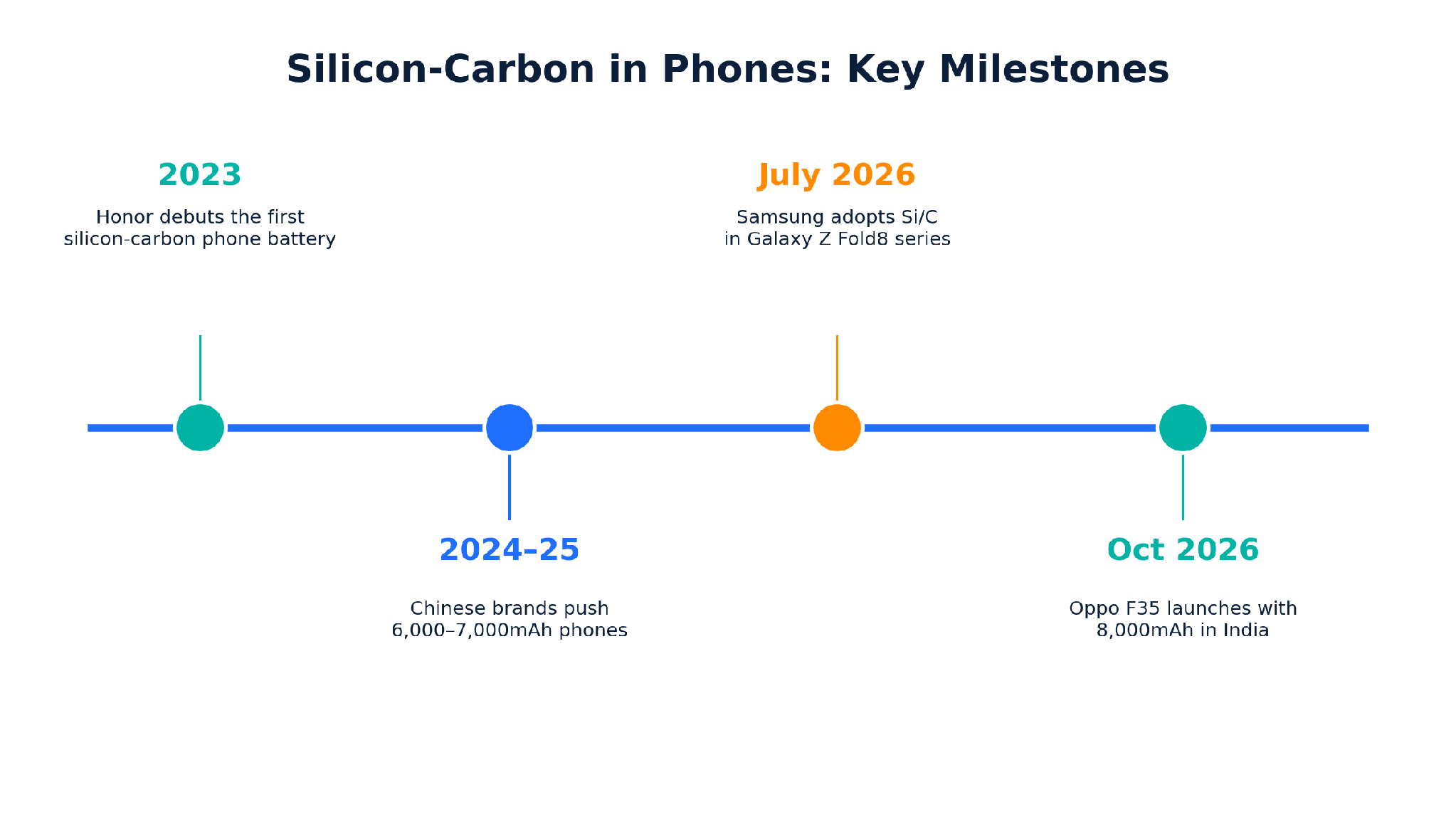
Silicon-carbon spent its first years in Chinese phones. Samsung, Apple and Google took a more cautious path. That changed in July 2026, when Samsung confirmed the Galaxy Z Fold8 series is its first to use silicon-carbon batteries.
Why Samsung Waited
A Samsung executive said the company adopted the technology only after it met strict safety standards. To get there, Samsung changed the whole battery system, including the anode, cathode and separator, and tested it across many scenarios. Samsung has also said it will decide on other Galaxy phones depending on whether the battery improves the user experience, while a rumor points to the Galaxy S27 series using it. The Galaxy Z Fold8 Ultra is reported to charge to about 67% in 30 minutes.
October 2026: The Big-Battery Phones
This month shows how far capacities have moved. Here is how the headline launches compare, based on launch coverage. For the full month, see our guide to upcoming smartphones in October 2026:
| Phone | Battery | Charging | Launch |
| Oppo F35 / F35 Pro | 8,000mAh | 80W | Oct 5, 2026 (India) |
| Vivo V80 | 7,200mAh | 90W | Oct 6, 2026 (India) |
| OnePlus 16 | Not confirmed here | Not confirmed here | Oct 12, 2026 (China) |
| Oppo Find X10 series | Not confirmed here | Not confirmed here | Around Oct 28, 2026 (expected, global/India) |
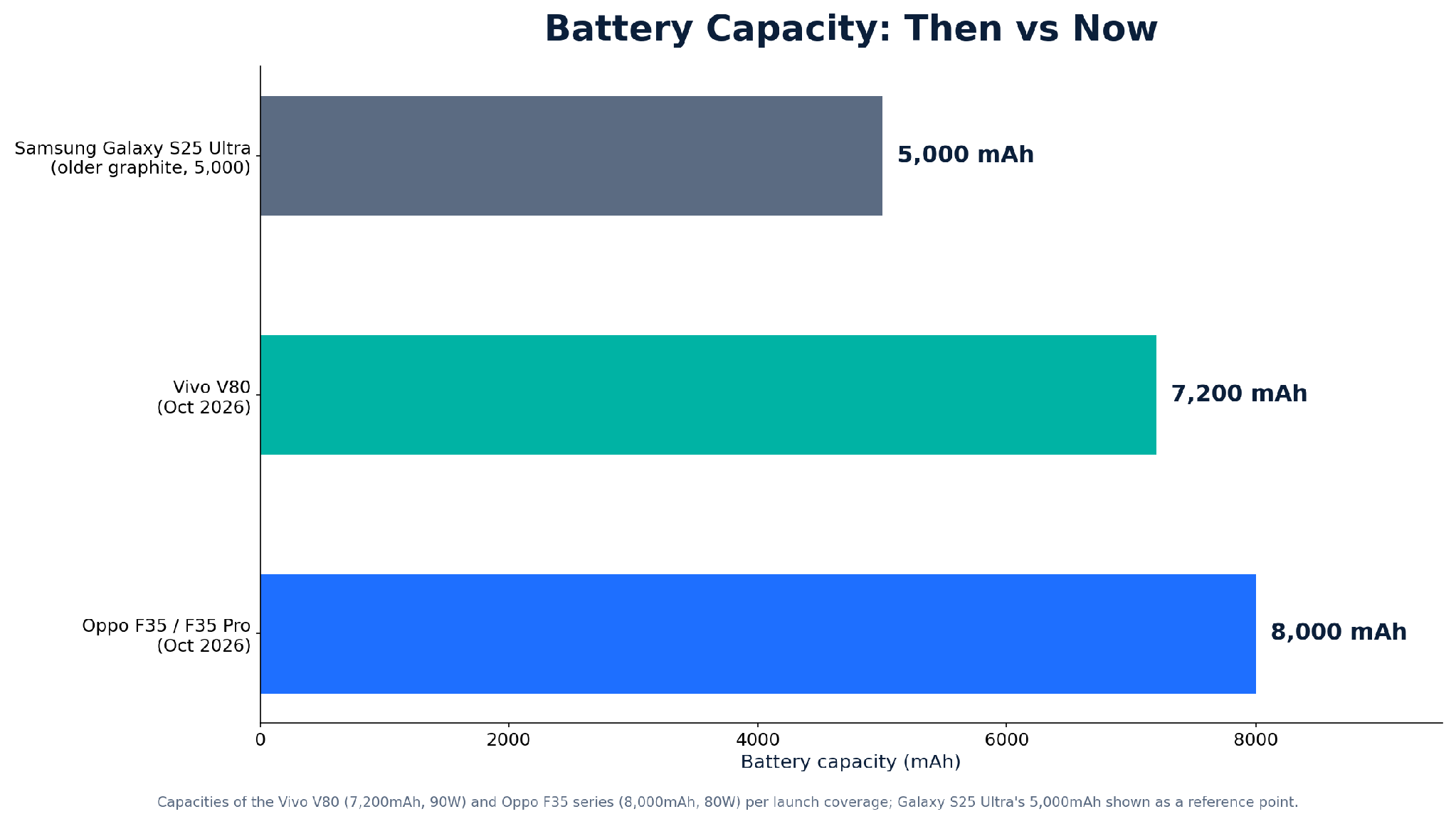
Note that brands do not always say which anode chemistry is inside a given phone, so a big number alone does not confirm silicon-carbon. Check the official spec sheet or a teardown review if the technology matters to you.
Silicon-Carbon Pros and Trade-offs
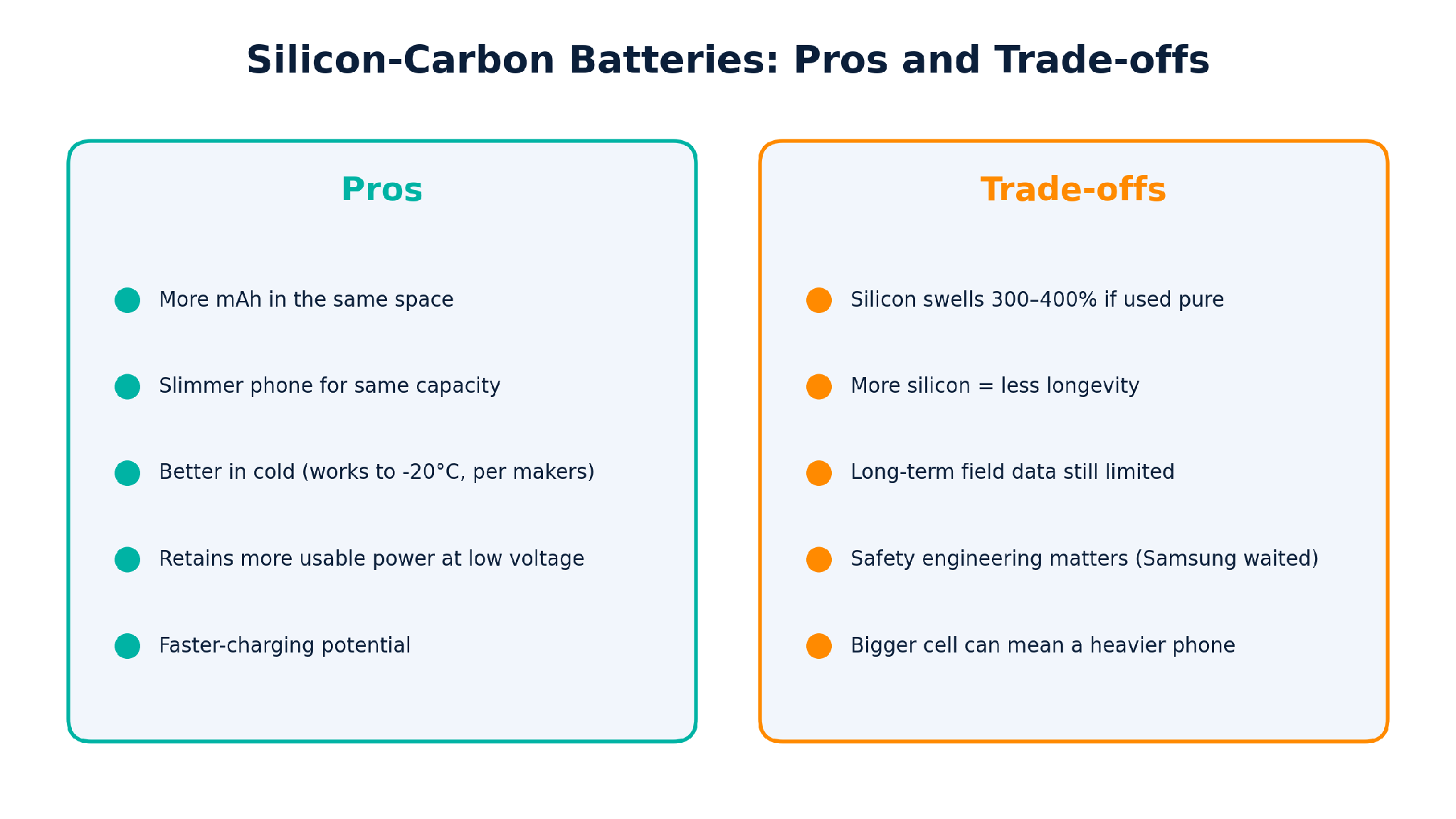
Pros
- More capacity in the same space, or a slimmer phone at the same capacity.
- Better cold-weather behavior and more usable power at low charge, according to makers.
- Potential for faster charging.
Trade-offs
- More silicon generally means more capacity but lower longevity, so brands have to balance the mix.
- Long-term real-world data on lifespan and safety is still being collected, which is why Apple, Samsung and Google moved carefully.
- Bigger batteries can add weight, and battery life also depends on the chip, display and software.
5 Things to Check Before You Buy a Big-Battery Phone
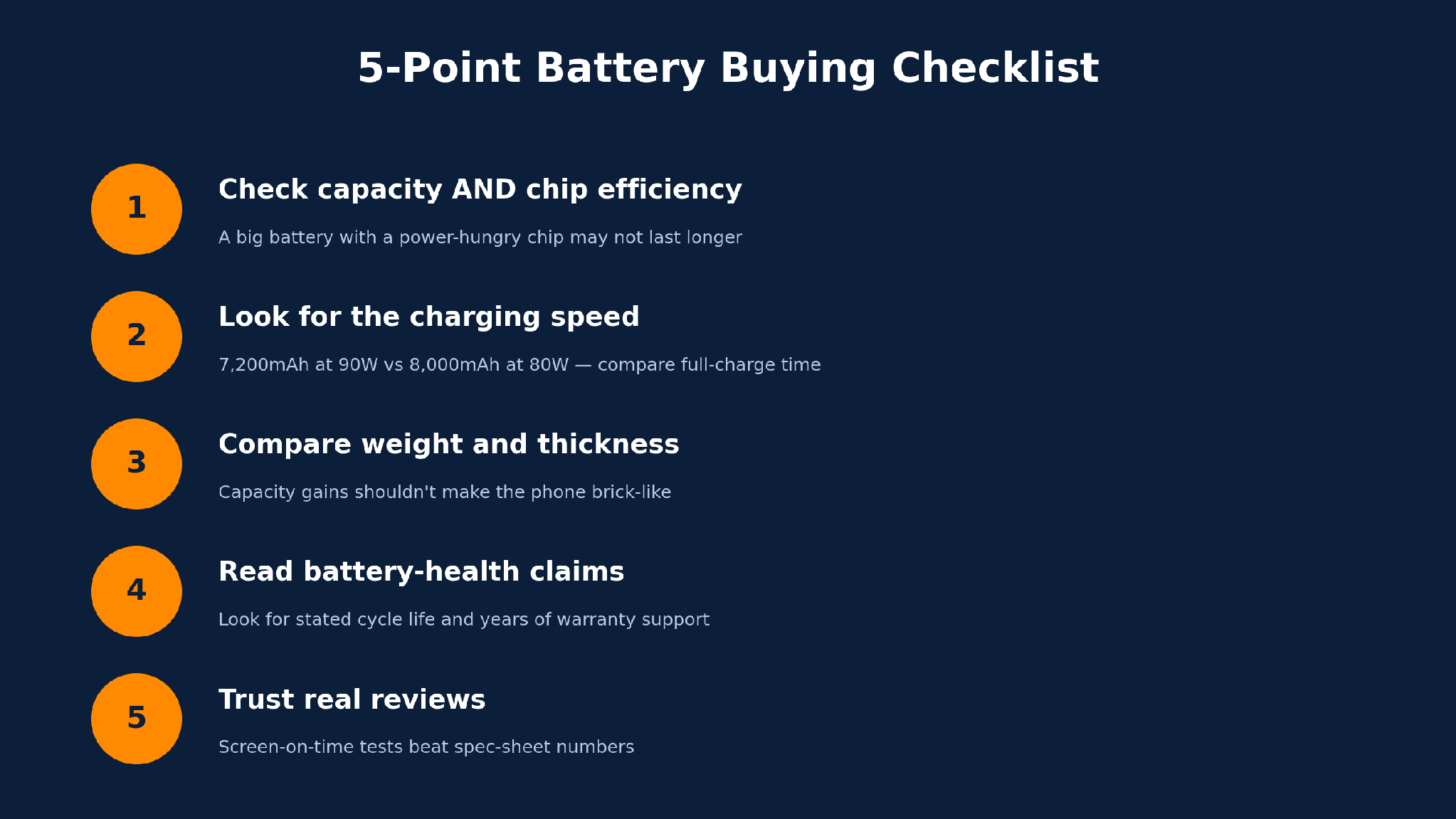
- Capacity and efficiency: a power-hungry chip can cancel out a larger battery.
- Charging speed: compare watts and the time for a full charge, not only capacity. Our fast charging explained guide covers what the numbers mean.
- Weight and thickness: make sure the phone is still comfortable to carry.
- Battery health policy: look for stated cycle life and long-term support.
- Real tests: trust screen-on-time results from reviews over spec-sheet numbers.
FAQs
Is a silicon-carbon battery safe?
Silicon-carbon cells are lithium-ion cells with a different anode, and the composite design is meant to limit the swelling that pure silicon would cause. Samsung says it waited until its design met strict safety standards, which shows brands treat this seriously. Choose phones from brands with clear battery safety certification and support.
Will a silicon-carbon battery last longer over the years?
Makers claim better structural stability and lifespan, but higher silicon content can reduce longevity, and independent long-term data is still limited. A good approach is to check the stated cycle life and warranty rather than rely on the technology name.
Does 8,000mAh mean two days of battery life?
Not automatically. Real battery life depends on the processor, screen, software and how you use the phone. Look at screen-on-time results in reviews.
Which phones use silicon-carbon batteries?
Honor was first, several Chinese brands followed, and Samsung brought the technology to its Galaxy Z Fold8 series in 2026. Browse specs for Honor, Samsung, Oppo and Vivo phones, and check each official spec sheet, since not every brand states the anode type.
Is silicon-carbon the final form of phone batteries?
No. Industry explainers describe it as a step toward higher-density options such as lithium-metal anodes, which are further away from phones.
Conclusion
Silicon-carbon explains why 7,000–8,000mAh batteries are suddenly normal. It packs more energy into the same space, and with Samsung now on board, it is moving from a Chinese-brand feature to a mainstream one. Still, capacity is only one part of battery life. Compare charging speed, chip efficiency, weight and real review tests before you decide. Follow HooriyaTech for launch coverage and full specs as new phones arrive.
Keep reading: more mobile news and guides on HooriyaTech.